
April 2 – 3, 2027
The Hidden Machinery of War: Intelligence, Communications, and Logistics in the 1862 Maryland Campaign
We hope you will be able to join us on April 2 & 3, 2027 for the Antietam Institute’s sixth annual Symposium, which will explore the fields of military intelligence, communications, and logistics as they were applied on the Maryland Campaign of 1862.
Moving beyond the battle lines, this symposium explores the administrative, technological, and tactical lifelines that shaped the outcomes of South Mountain and Antietam. By re-examining the critical inputs of military intelligence, field communications, and supply chains, we reveal how the friction of information and resource management ultimately decided the fate of the campaign.
The Institute has gathered a distinguished group of speakers to share their insights with you – on the ground and in the ballroom.
The main Symposium event on Saturday will be held in the Storer Ballroom in the Student Center on the campus of Shepherd University – 210 N King Street, Shepherdstown, WV 25443 [google map]. A continental breakfast and lunch will be provided.
Also offered, the Friday afternoon before the Symposium, is an in-depth bus tour of Federal signal stations on the battlefield followed by a social gathering at the nearby Potomac Ridge Brewery.
Antietam Institute membership is required to attend this event.
The event fee for the Symposium on Saturday is $130, and is limited by space to 125 attendees. The fee to attend the optional Friday tour is $40, and there will be room for 50 people.
Registration will open on October 9, 2026 and close on March 20, 2027 or sooner if filled.
Symposium Itinerary
Friday, April 2, 2027 (optional)
The optional event on the Friday before the Symposium features a bus tour of 9 stops following the Federal Signal Service across the Antietam battlefield.
12:30p – Check in and meet your bus at the Antietam National Battlefield overflow parking lot across Dunker Church Road from the Visitors Center [google map].
1:00p – 4:00p “The Federal Signal Service at Antietam: Battlefield Intelligence in Action” Cory Pfarr
On September 17, 1862, the Battle of Antietam was fought not only with muskets and artillery, but with information. From elevated signal stations on and overlooking the battlefield, Federal signalmen observed troop movements, reported developments, and transmitted intelligence to commanders as the battle unfolded.
This three-hour, nine-stop tour follows the Federal Signal Service across the Antietam battlefield, tracing the network of forward, headquarters, and backbone stations that helped connect Union commanders with events on the field. Beginning at Red Hill and continuing through the Pry House, Joseph Poffenberger and Michael Miller farms, the East and West Woods, Roulette Farm, and Henry Rohrback Farm, the tour examines the signal network and the often-overlooked signalmen who gathered and relayed information during the battle.
Along the way, we will follow the Hooker–Meade–Sumner station as it came to move with specific commands, examine the headquarters stations that connected the Federal High Command with the battlefield and backbone stations, and explore the role of fixed stations in maintaining the flow of information. The tour offers a new perspective on Antietam by showing how the Union army’s emerging communications and intelligence system contributed not only to the collection and transmission of battlefield information, but also to the command and control of the army in the midst of America’s bloodiest single day.
4:30p – Social event at the Potomac Ridge Brewery [google map] / Dinner on your own
Saturday, April 3, 2027
8:15a – Registration and breakfast at at the Storer Ballroom in the Student Center, Shepherd University [google map].
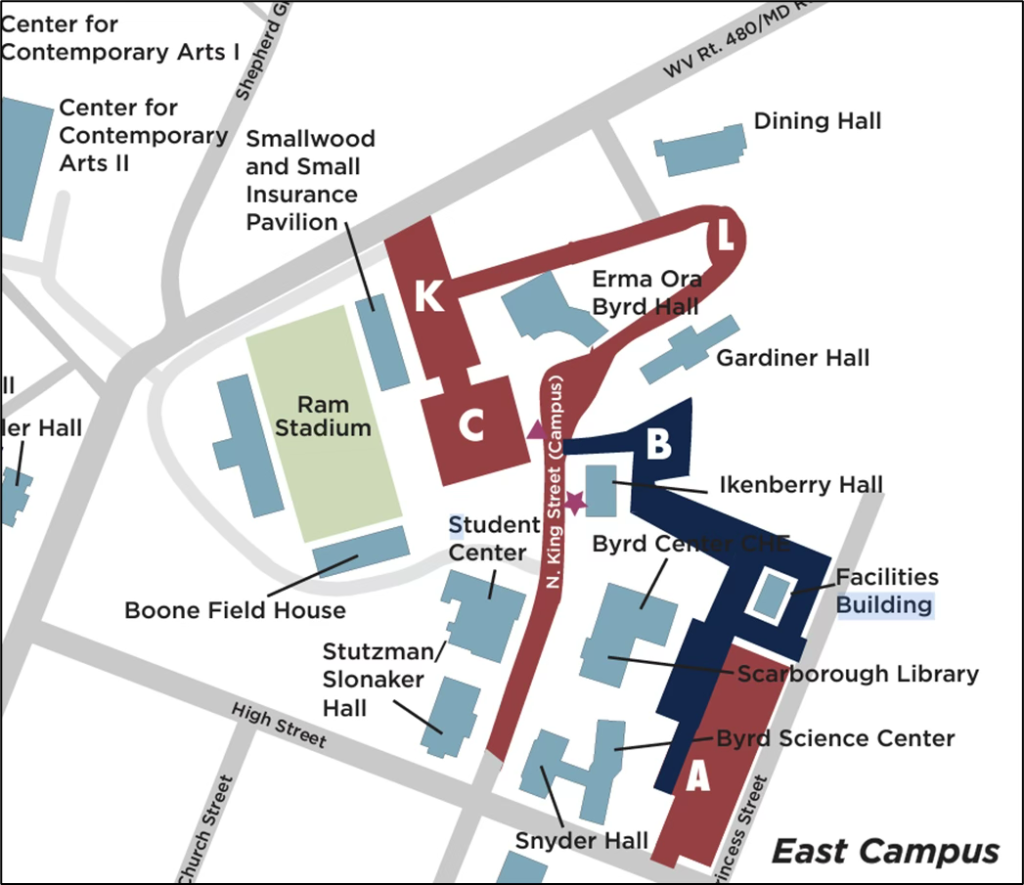
Parking map for the Student Center. Attendees should park in lots A, B, C, or K:
8:50a – Welcome Chris Vincent
9:00a – “My Latest Intelligence Shows …” Intelligence During the Maryland Campaign Scott Kenepp
Intelligence is a force multiplier for command decision-making. To succeed in warfare, military commanders must make quality decisions through accurate intelligence assessments. The role intelligence plays in military combat is a valuable asset and a key to success on a battlefield.
Both Robert E. Lee and George McClellan utilized intelligence to enhance their decisions during the Maryland Campaign. Lee built his invasion strategy and operational plans based on his understanding of the intelligence situation, while McClellan collected and analyzed intelligence to inform his decisions in pursuit of Lee’s army in Maryland. Both commanders developed battle plans influenced by the gathering of intelligence to gain a decisive advantage for the eminent battle.
This presentation will look at intelligence during the Civil War and explore how intelligence supported both commanders’ decisions during a rapid campaign into Western Maryland in September of 1862. Each commander evaluated gathered information and navigated the complexities of intelligence to fulfill strategic and operational objectives.
10:00a – “The Spy Game in Civil War Maryland” Matt Borders
Matt’s presentation will be on the important and influential use of spies in Maryland during the Civil War by both United States and Confederate forces. The presentation focuses primarily on Central Maryland as it was the highway of three separate Confederate invasions and looks at some of the major personalities both in and out of uniform that were operating throughout the region. The Spy Game in Maryland during the Civil War was a microcosm of the war itself with people of all backgrounds becoming involved in this risky venture. Neighbor distrusted neighbor, and everyone was suspect. These first steps in military intelligence gathering led to a professionalization of the practice as the war continued and why many of the nation’s players in intelligence today trace their origins to the Civil War.
11:15a – “Full View of the Enemy’s Lines”: Reassessing Intelligence, Command, and the Federal Signal Service at Antietam Cory Pfarr
Civil War scholarship has long framed Antietam through a familiar contrast: Robert E. Lee as the dynamic battlefield commander and George B. McClellan as the detached spectator at the Pry House. Primary source evidence from the Maryland Campaign presents a different picture. Under Major Albert J. Myer and the operational direction of Captain Benjamin F. Fisher, the Federal Signal Service established a network of forward, headquarters, and backbone stations that gathered and relayed intelligence throughout September 17, 1862.
One forward post—the Hooker–Meade–Sumner station, manned by James Byron Brooks and William H. Hill—functioned as a mobile station that moved with Federal command elements from Meade and Hooker to Sumner. Others, including the fixed Michael Miller Farm Station and the backbone post on Red Hill, transmitted battlefield reports rapidly across the field.
Together, these operations reveal the Signal Service as an important component of the Army of the Potomac’s command environment, challenging the traditional image of McClellan as a commander dependent primarily upon his own direct observation from the Pry House.
12:15p – Lunch
1:15p – “Still no signs of our commissary wagons”: Logistics and the Army of Northern Virginia in the Maryland Campaign Michael Hardy
It takes an army of horses, mules, wagons, quartermasters, commissaries, officers, and workers to move an army. When that army breaks down, soldiers go hungry and lack supplies needed to win the battle. If even one piece fails to complete its role in the grand drama of logistics, the entire system can collapse.
This was nowhere more evident than in the experiences of Robert E. Lee and his Army of Northern Virginia in the Maryland Campaign. Among the many challenges they faced as they left the environs of Washington, D.C., and headed into Maryland the first few days of September 1862 was the issue of supply. While Stonewall Jackson’s command had the good fortune to seize Harper’s Ferry and the bounty stored there, such a prize was unusual, and Lee’s men, more often than not, were lacking food and other essential supplies. Issues with supply affected every other aspect of the army, from morale to military success, both in the Maryland Campaign and in the war as a whole.
2:15p – “An Immense Challenge”: Supplying the Army of the Potomac in the Maryland Campaign Scott Hartwig
After the defeat of the Union army at the Battle of Second Manassas and the withdrawal of the Army of the Potomac by water from the Virginia peninsula, the logistics of the Army of the Potomac were in a chaotic muddle as the army prepared to take the field into Maryland at the beginning of September 1862. How this mess was sorted out and the army kept supplied is our story. It was, in the words of Chief Quartermaster Rufus Ingalls, work that was “very onerous and accumulating.”
3:30p – Speaker Roundtable with all the Symposium presenters
4:30p – 5:00p – Wrap up session
Presenters
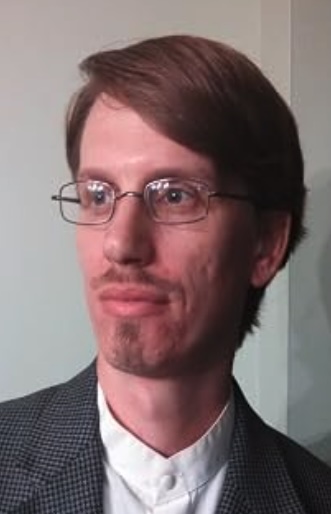
A lifelong student of the American Civil War, Matthew Borders holds a BA in US History and an MS in Historic Preservation. He has worked as a National Park Service ranger at Antietam National Battlefield, as well as a historian and battlefield surveyor for the National Park Service’s American Battlefield Protection Program. He continues to work for the National Park Service and is a Certified Battlefield Guide at Antietam National Battlefield and Harpers Ferry National Historic Site. A founding member of the Antietam Institute and president of the Frederick County Civil War Round Table, Matthew, along with fellow Antietam Guide, Joe Stahl, has also published the Faces of Union Soldiers series.
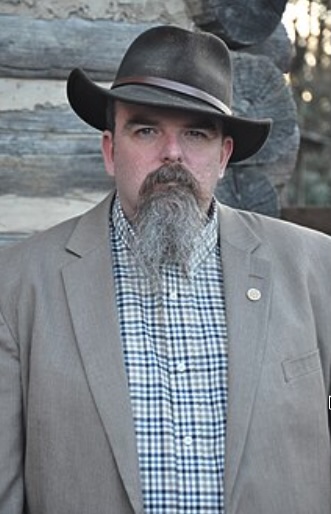
Michael C. Hardy is an award-winning and widely published author. He has written on a large array of subjects – airplanes, Southern places, and Confederate regiments—in books, articles, and blog posts. He is a graduate of the University of Alabama. In 2010, Hardy was named North Carolina Historian of the Year by the North Carolina Society of Historians. He was also awarded the James I. Robertson Literary Prize by the Robert E. Lee Civil War Library and Research Center in 2018 for his history of the Branch-Lane Brigade, General Lee’s Immortals (Savas Beatie, 2018). Michael has presented at a number conferences, like the Appomattox/Longwood Civil War Seminar, Pamplin Historical Park’s Symposium, and the American Battlefield Trust’s Annual Meeting, as well as being featured on an episode of Blood and Fury on the American Heroes Channel. When not researching, writing, and traveling, he volunteers at historic sites, sharing his love for history.
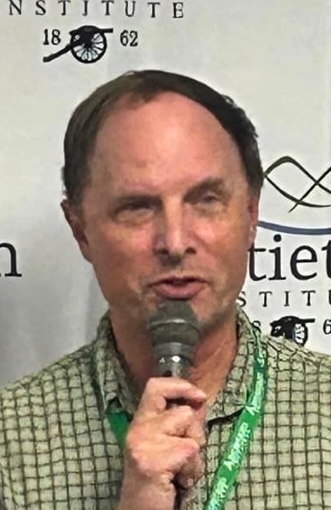
D. Scott Hartwig was the supervisory park historian at Gettysburg National Military Park and retired in 2014 after a 34-year career in the National Park Service, nearly all of it spent at Gettysburg. He won the regional Freeman Tilden Award for excellence in interpretation in 1993, and was a key player for the design of all aspects of the current Gettysburg museum/visitor center. He is the author of To Antietam Creek: The Maryland Campaign from September 3 to September 16, published in September 2012 by Johns Hopkins University Press, and of I Dread The Thought of the Place: The Battle of Antietam and End of the Maryland Campaign, also published by Johns Hopkins in August 2023. The latter title won the 2024 Barksdale Award, Emerging Civil War Book Award, and was one of two books which received honorable mention for the American Battlefield Trust 2024 History Prize.
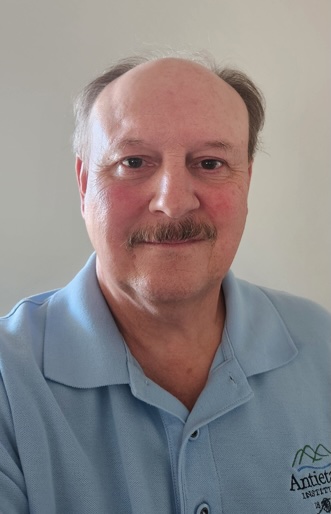
Scott Kenepp retired with 37 years of government service from the Department of Defense and Intelligence Community performing Geospatial Intelligence Production, Analytic Tradecraft, and Strategic Resource Management. He developed and executed multiple analytic staff rides supporting two federal agencies with Intelligence Analysis. Scott earned a Geography degree from Penn State University and a Masters in Strategic Intelligence from the National Intelligence University. He is a Volunteer and Licensed Battlefield Guide at Antietam National Battlefield Park.
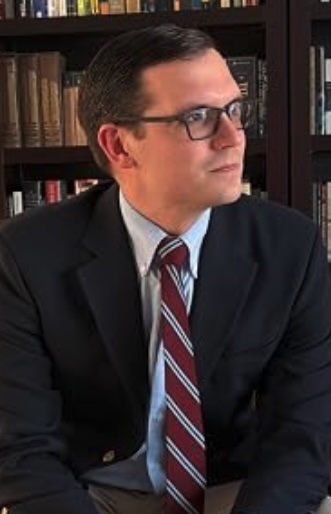
Cory M. Pfarr works for the Department of War (formerly Defense). He is the award-winning author of Longstreet at Gettysburg: A Critical Reassessment (2019); Righting the Longstreet Record at Gettysburg: Six Matters of Controversy and Confusion (2023); and the forthcoming The Federal Signal Service at Antietam: Stations, Officers and Battlefield Intelligence on America’s Bloodiest Day (2026), all published by McFarland Books. His essays and scholarship have appeared in Gettysburg Magazine, North & South Magazine, and The Massachusetts Historical Review, and his work has been featured on the Pennsylvania Cable Network and C-SPAN American History TV, as well as presented to audiences at the U.S. Army War College. He lives in Fallston, Maryland, with his wife and three children.
A Note about Refunds
Full payment is required upon registration. If you cancel in writing before March 2, 2027 (one month prior to the event), 80% of your registration fee will be refunded. After that date there are no refunds, but another person may be substituted without penalty.
Again, Antietam Institute membership is required to attend this event.
Accomodations
The following establishments are convenient the Symposium venue:
Inn at Antietam (Sharpsburg)
Jacob Rohrbach Inn (Sharpsburg)
The Bavarian Inn (Shepherdstown)
Thomas Shepherd Inn (Shepherdstown)
Quality Inn – Room block for 20 rooms (Shepherdstown)
Clarion Inn Harpers Ferry-Charles Town (Harpers Ferry)
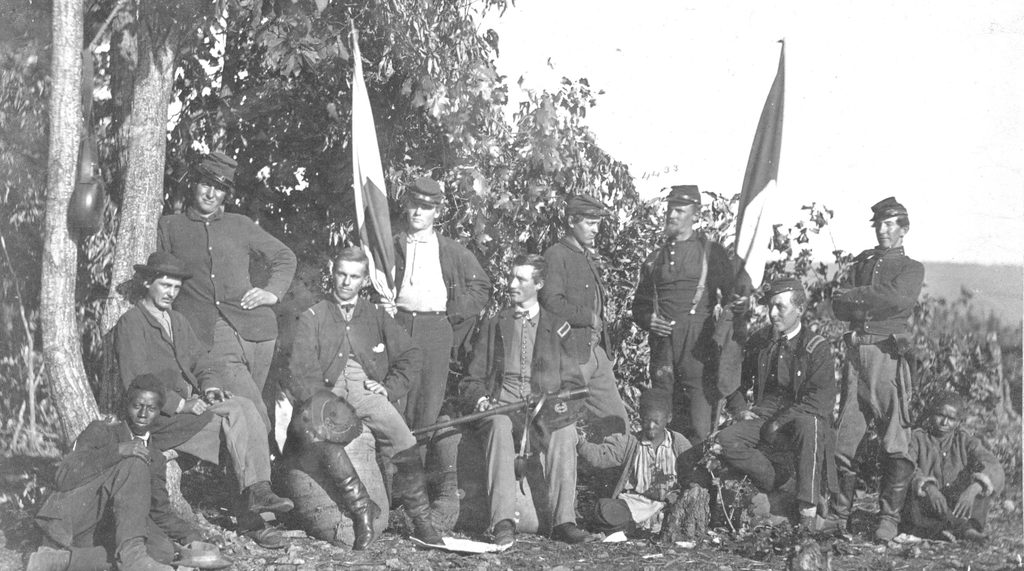
Image at the top: Signal Corps Detachment, Elk Mountain, Md., October 1862 (Library of Congress)