
April 10-11, 2026
A Comparison of the Antietam and Gettysburg Campaigns
We hope you were able to join us on April 10 & 11, 2026 for the Antietam Institute’s fifth annual Symposium, which took a closer look at the intersections between the Maryland Campaign of 1862 and that of Gettysburg the following year.
The Institute gathered a distinguished group of speakers to share their insights into the politics, strategy, and leaders involved.
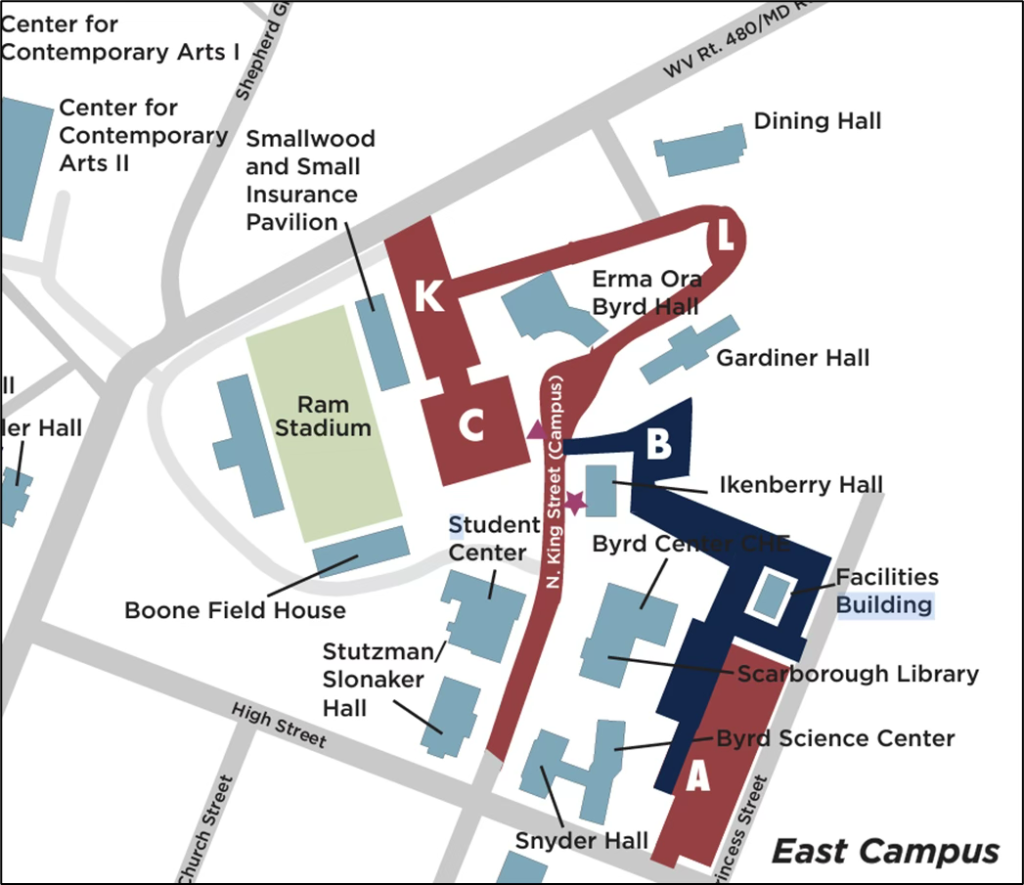
The Symposium was held in the Storer Ballroom in the Student Center on the campus of Shepherd University – 210 N King Street, Shepherdstown, WV 25443 [google map]. A continental breakfast and lunch were provided.
This event also offered an optional walking tour of the Falling Waters battlefield the Friday afternoon before the Symposium, as well as a speaker and dinner that evening in the Storer Ballroom.
Antietam Institute membership was required to attend this event.
The event fee for the Symposium on Saturday was $130. The fee to attend the optional Friday tour was $25, and it was $55 to attend the Friday evening event. There was space for a maximum of 50 people on the Friday walk, which sold out, and for 125 people each at the Friday evening and Saturday programs on the Shepherd University campus.
Registration opened on October 5, 2025 and closed on March 20, 2026.
Symposium Itinerary
Friday, April 10, 2026 (optional)
Optional events on the Friday before the Symposium included an excursion on and near the Falling Waters battlefield led by noted battle expert George Franks, and later in the day, a talk by Carol Reardon followed by dinner at the Storer Ballroom.
12:00p – Check in and gather at the Battle of Falling Waters site at the Daniel Donnelly House, 14906 Falling Waters Road, Williamsport, MD [google map] for the battlefield tour. Please carpool if possible.
12:30p – 3:00p “The Battle of Falling Waters, July 14, 1863” George Franks
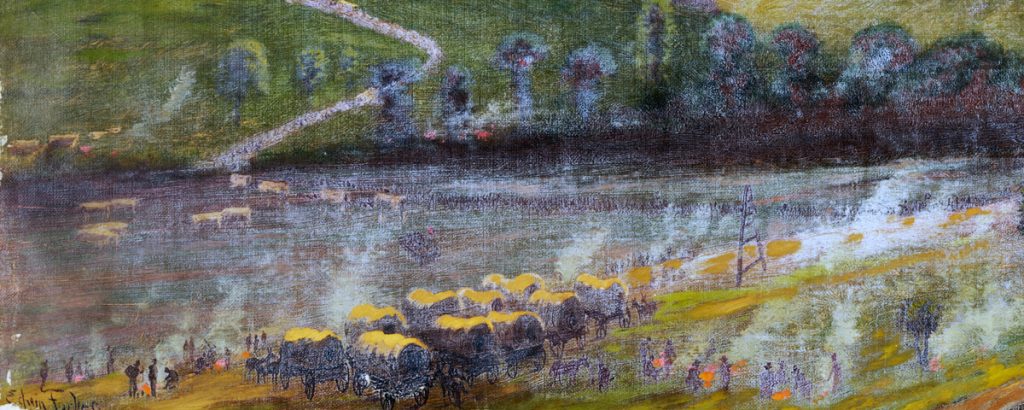
The July 14, 1863 Battle of Falling Waters near Williamsport in Maryland was the final battle of the Gettysburg Campaign before General Robert E. Lee’s Army of Northern Virginia successfully escaped into Virginia.
The tour takes place on 19½ acres of battlefield, 16 of which is private property. A portion of the battlefield was purchased and preserved with the support of the American Battlefield Protection Program and the Heart of the Civil War Heritage Area.
The entire 500 acre battlefield is visible from many spots on the tour. Sites included are the 1823 Daniel Donnelly House (exterior), a “witness tree”, the ground where General James Archer’s Brigade of Tennessee and Alabama infantry repelled two companies of Michigan Cavalry, site of the artillery “lunettes” depicted in period combat art, site of the barn where wounded were recovering and used by Confederate snipers, the spot where Confederate Brigadier General James Johnston Pettigrew was mortally wounded and much more.
Following the tour of Falling Waters battlefield, we will drive 2 miles to the Potomac Fish and Game Club. From there, the group will hike northward on the C&O Canal NHP tow-path to the location of the Potomac River crossing on July 13-14, 1863. Lee’s engineers rebuilt a damaged pontoon bridge that enabled his army’s artillery, wagons, and the Corps of Generals James Longstreet and A. P. Hill to cross the swollen Potomac River back into Virginia (now West Virginia).
3:30p Registration at the Storer Ballroom in the Student Center, Shepherd University [map]. Parking available in Lots A, B, and C:
4:00p – 5:00p “The Art and Science of Building Civil War Armies: Perspectives from Antietam and Gettysburg” Dr. Carol Reardon
At the start of the Civil War, very few Americans appreciated the daunting challenges involved in raising, organizing, equipping, training, and leading a massive army onto the field of battle. Over the course of four years, the Army of the Potomac and the Army of Northern Virginia essentially became testbeds for new ideas about military organization, logistical and technological innovations, and emerging concepts for effective warfighting. The rival armies at Antietam and Gettysburg illustrate two exceptionally interesting points on a very steep learning curve.
5:00p Dinner
6:00p – 7:00p Live from the Storer Ballroom: The Antietam & Beyond Podcast with George Franks, Carol Reardon, and some Institute board members
Saturday, April 11, 2026
8:15a – Registration and breakfast at at the Storer Ballroom in the Student Center, Shepherd University
8:50a – Welcome Chris Vincent
9:00a – Fatal Illusions: A Comparison between National and International Politics Dr. Jim Broomall
Confederate fortunes ran high in 1862. Foreign intervention remained a distinct possibility and northern mid-term elections fundamentally shifted political alignments. Having lost control of the House of Representatives as well as key governorships, Republicans were forced to run a coalition government for the remainder of the war. Within a year, however, political fortunes reversed in favor of the Union: Lincoln’s initially unpopular Emancipation Proclamation had gained significant traction, foreign intervention now seemed a distant hope, widespread social protest rocked southern cities, and the recently faltering Republican Party had regained momentum and direction.
This talk will take a bird’s-eye view to survey and compare the shifting national and international political landscapes of 1862 and 1863 to argue that Confederate political leadership operated with fatal illusions that led to irreversible military defeats.
10:00a – “We Cannot Afford to be Idle”: The Military Contexts of the Antietam and Gettysburg Campaigns Doug Douds
Separated by nine months, the military circumstances surrounding the Antietam and Gettysburg campaigns were similar in some accounts and drastically different in others. Recent Confederate victories in the East enabled the window of opportunity for both. General Robert E. Lee’s tactical rationale for crossing into Union territory was consistent in 1862 and 1863.
As always, Lee needed to feed and sustain his Army of Northern Virginia. Maryland and Pennsylvania represented plush lands from which his soldiers could find succor and, at the same time, give relief to Virginia.
Operationally, Confederate actions would disrupt future Union plans of campaign. The disruption was a matter of initiative. In Lee’s efforts to control that initiative, the campaign’s similarities diverge. In 1862, Lee sought to sustain the initiative, whereas in 1863, Lee sought to regain it.
Confederate battlefield successes in the East and West enabled opportunities born of contingency for collective offensive action in 1862 – a Union strategic crisis. By 1863, Union successes in the West drove the Confederacy to deliberate decision-making and a single Eastern offensive – a Confederate crisis. Concurrently, conditions along the coastline and at sea reflected growing Union strength and control that impacted political, economic, and military futures. Moreover, national policies guiding the war had changed, and with it, its character.
Because military activity is an extension of politics, while Lee could impact the mid-term elections in 1862, the summer of 1863 was a long way from the following year’s Presidential election. Nonetheless, in both offensive campaigns, the Army of Northern Virginia was chosen as the primary instrument to shape Union will and the war’s trajectory.
11:15a – “We Ought to Be Satisfied With Driving Them Out of Maryland”: The Leadership of the Army of the Potomac in the Antietam and Gettysburg Campaigns Dr. Jennifer M. Murray
While popularly considered “turning points” of the American Civil War, both the Battle of Antietam and the Battle of Gettysburg served as transformative events in the Army of the Potomac and the Army of Northern Virginia.
This program explores the high command of the Army of the Potomac in both campaigns, focusing primarily on Generals George McClellan and George Meade. Both the September 1862 battle and the July 1863 battle were critical inflection points in civil-military relations, resulting in President Abraham Lincoln’s decision to relieve McClellan of command in the immediate wake of the mid-term elections, and then eight months later express profound displeasure with Meade for his pursuit to the Potomac River. Indeed, the Army of the Potomac had changed considerably between September 1862 and July 1863 and this program offers an opportunity to explore that army and the men who led it.
12:15p – Lunch
1:15p – “There is something in a charge”: G. T. Anderson’s Brigade at Sharpsburg and Gettysburg Scott Hartwig
In the Battle of Antietam, Colonel George T. Anderson’s Georgia brigade carried 597 officers and men into action. They participated in hard fighting through much of the day yet suffered only 87 casualties on a day when 30-50% losses were not unusual. No brigade in the Army of Northern Virginia probably inflicted more casualties upon their opponents. How did Anderson manage his command to maximize the damage to the Union forces they faced while minimizing his own losses? Ten months later, at Gettysburg, Anderson could not repeat this success. His men again drove the Federals but this time at a cost of nearly 700 men. What happened at Gettysburg that prevented Anderson from duplicating his success at Sharpsburg?
2:15p – From Smoketown to Letterman: A Comparative Look at Two US Army General Hospitals Dan Welch
Often neglected in the study of battles and campaigns are their resultant aftermath. In the wake of such terrible slaughter at Antietam and Gettysburg, two large US Army General Hospitals were constructed and put into operation to treat the thousands of wounded on both sides. Hear the incredible stories of survival and the heroic efforts of the medical staff at both hospitals, and see how Letterman’s system became more refined between September 1862 and July 1863 in this fascinating program.
3:30p – 5:30p Live from the Storer Ballroom: The Antietam & Beyond Podcast with all the Symposium speakers
5:30p – 6:00p – Wrap up session
Presenters
James J. Broomall holds the William Binford Vest Chair in the Department of History at the University of Richmond. He is a cultural historian of the Civil War era and has published articles or essays in Common Place, Ohio Valley History, Gettysburg Magazine, Civil War History,and Civil War Times. He co-edited with William A. Link Rethinking American Emancipation: Legacies of Slavery and the Quest for Black Freedom (Cambridge University Press, 2016), and the University of North Carolina Press published his book, Private Confederacies: The Emotional Worlds of Southern Men as Citizens and Soldiers, in 2019. Dr. Broomall has completed three major historic resource studies for National Park Service sites and frequently conducts guided tours of historic sites and Civil War-era battlefields. He directed the George Tyler Moore Center for the Study of the Civil War at Shepherd University, Shepherdstown, WV, for nearly a decade, and previously served on the faculty of the University of North Florida and Virginia Tech.
Doug Douds, of Stroudsburg, PA, is a retired Marine Colonel and faculty member at the U.S. Army War College where he directs the Advanced Strategic Art Program. He has served as a strategist and senior speechwriter for the Chairman of the Joint Chiefs of Staff. He commanded a Marine F/A-18 squadron in Iraq. As pilot, he accrued over 3,000 flight hours, 340 aircraft carrier traps, and 135 combat missions over Bosnia, Kosovo, and Iraq and is a graduate of the Navy Fighter Weapons School (Top Gun). Douds received two Bachelors of Arts degrees in political science and history from Wake Forest University, a Master of Strategic Studies degree from the Army War College, and holds a Doctorate in Military History from Leeds University, England. He has appeared as a subject matter expert on History Channel and Netflix documentaries Grant, Abraham Lincoln, Theodore Roosevelt, The Great War, FDR, D-Day, and Churchill at War. He is also a Licensed Battlefield Guide at Gettysburg where he lives with his wife.
George F. Franks, III is the President of Franks Consulting Group, a management consulting firm, and owner of Geo. Franks, Hatter, a global e-commerce business. He is a former technology executive with extensive international experience. George is the founder and President of the Battle of Falling Waters 1863 Foundation, Inc. and President of Hagerstown Civil War Round Table. He is a Commissioner on the C&O Canal Federal Advisory Commission. George served as an officer and governor of the Company of Military Historians and as President of the organization’s Chesapeake Chapter. He was President of the Capitol Hill Civil War Round Table in Washington, D.C. and is an active member of Save Historic Antietam Foundation and Antietam Institute. George is the author of Battle of Falling Waters 1863: Custer, Pettigrew and the End of the Gettysburg Campaign and lives in the 1823 Daniel Donnelly House on the battlefield – less than a mile from the C&O Canal. George was awarded the 2015 John Frye Historical Preservation Award by the Washington County (Maryland) Commissioners. He studied history at the U.S. Naval Academy and the University of Pittsburgh.
D. Scott Hartwig was the supervisory park historian at Gettysburg National Military Park and retired in 2014 after a 34-year career in the National Park Service, nearly all of it spent at Gettysburg. He won the regional Freeman Tilden Award for excellence in interpretation in 1993, and was a key player for the design of all aspects of the current Gettysburg museum/visitor center. He is the author of To Antietam Creek: The Maryland Campaign from September 3 to September 16, published in September 2012 by Johns Hopkins University Press, and of I Dread The Thought of the Place: The Battle of Antietam and End of the Maryland Campaign, also published by Johns Hopkins in August 2023. The latter title won the 2024 Barksdale Award, Emerging Civil War Book Award, and was one of two books which received honorable mention for the American Battlefield Trust 2024 History Prize.
Dr. Jennifer M. Murray is an Assistant Professor of History at Shepherd University and the Director of the George Tyler Moore Center for the Study of the Civil War. Her most recent publication is On A Great Battlefield: The Making, Management, and Memory of Gettysburg National Military Park, 1933-2023, published by the University of Tennessee Press in 2014 and printed as a second edition in 2023. Murray is currently working on a full-length biography of General George Meade, tentatively titled Meade at War. She is the co-editor of the forthcoming, “They Are Dead, And Yet They Live”: Civil War Memories in a Polarized America to be published by the University of Nebraska Press in February 2026. Prior to joining the faculty at Shepherd, Murray taught at Oklahoma State University in Stillwater. A native of Maryland, Murray worked as a seasonal interpretive park ranger at Gettysburg National Military Park for nine summers.
Dr. Carol Reardon, a Pittsburgh native, pretends to have retired from a long career as an academic military historian. From 1991 until 2017, she taught at Penn State University and retired as the George Winfree Professor Emerita of American History. Additionally, she served as Visiting Professor of History at the United States Military Academy at West Point in 1999-2000 and twice held the General Harold K. Johnson Professorship at the U. S. Army War College in 1993-1994 and in 2011-2012. Post-retirement, she has served as adjunct professor of History and Civil War Era Studies and History at Gettysburg College. Dr. Reardon specializes in the study of the American Civil War and the Vietnam conflict. Her most notable Civil War publications include the prize-winningPickett’s Charge in History and Memory (1997), With a Sword in One Hand and Jomini in the other: The Problem of Military Thought in the Civil War North,(2013)and Soldiers and Scholars: The U.S. Army and the Uses of Military History, 1865-1920 (1990). Her most significant work on the Vietnam War is Launch the Intruders (2005),centering on an A-6 squadron’s 1972 combat cruise during Linebacker I and II. Inspired by her long experience with military staff rides, she authored—with Tom Vossler (Colonel, US Army, Retired)–A Field Guide to Gettysburg: Experiencing the Battlefield Through History, Places, and People (2013), as well as A Field Guide to Antietam: Experiencing the Battlefield Though History, Places, and People (2016). Dr. Reardon was the first woman to be elected—and then re-elected—to the presidency of the Society for Military History, the premier professional association for this field of study. She serves on the Board of Directors of the Gettysburg Foundation and has chaired its Education Committee. Dr. Reardon received her Ph.D. in History from the University of Kentucky in 1987, her MA in History from the University of South Carolina in 1980, and her BS in biology from Allegheny College in 1974.
Dan Welch is a Park Ranger at Gettysburg National Military Park and the editor of the long-running Gettysburg Magazine. He has been a contributing member at Emerging Civil War for over eight years and is the coauthor of two works in the Emerging Civil War Series: The Last Road North: A Guide to the Gettysburg Campaign, 1863 and Never Such A Campaign: The Battle of Second Manassas, August 28-30, 1862. Welch has also co-edited several volumes in the Emerging Civil War’s Tenth Anniversary Series and is also the co-author of Ohio at Antietam: The Buckeye State’s Sacrifice on America’s Bloodiest Day.
Institute members John Banks and Tom McMillan dive deep into the Battle of Antietam as well as the 1862 Maryland Campaign and related Civil War topics in their “Antietam and Beyond” podcast. These longtime journalists and their bevy of distinguished guests share stories, knowledge and much more about the battle and the most compelling period in American history. The podcast is sponsored by Civil War Trails.
John Banks is author of A Civil War Road Trip Of A Lifetime, Connecticut Yankees at Antietam and Hidden History of Connecticut Union Soldiers. His work has been featured in such notable publications as The New York Times, Civil War Times, Civil War Monitor, Civil War News, America’s Civil War and Military Images. Banks, who attended Mount Lebanon (Pa.) High School, graduated from West Virginia University (B.A. in journalism). A longtime journalist (the Dallas Morning News and ESPN), he is secretary-treasurer of The Center for Civil War Photography. Banks lives with his wife, Carol, in Nashville.
Tom McMillan spent a lifetime in sports media and communications, but his true passion is history, and he has written five books on American history — including two on the Civil War. Tom has served on the boards of Pittsburgh’s Heinz History Center, the Friends of Flight 93 National Memorial and the Antietam Institute, as well as the marking committee of the Gettysburg Foundation. He recently retired after 25 years as VP of Communications for the Pittsburgh Penguins of the NHL. Tom and his wife, Colleen, are Antietam Battlefield Ambassadors, Institute Honor Guard members and contributors to the Antietam Journal. They split their time between Pittsburgh and (shhh!) Gettysburg.
A Note about Refunds
Full payment was required upon registration. If you canceled in writing before March 10, 2026 (one month prior to the event), 80% of your registration fee would have been refunded. After that date there were no refunds, but another person could have been substituted without penalty.
Again, Antietam Institute membership was required to attend this event.
Accomodations
The following establishments are convenient the Symposium venue:
Inn at Antietam (Sharpsburg)
Jacob Rohrbach Inn (Sharpsburg)
The Bavarian Inn (Shepherdstown)
Thomas Shepherd Inn (Shepherdstown)
Clarion Inn Harpers Ferry-Charles Town (Harpers Ferry)
Image at the top: Escape of the Army of [Northern] Virginia, commanded by General Lee, over the Potomac River near Williamsport (Edwin Forbes, Library of Congress)